Monday, 12 September 2011

Through the eyes of a three year old


by Farhan Ansari


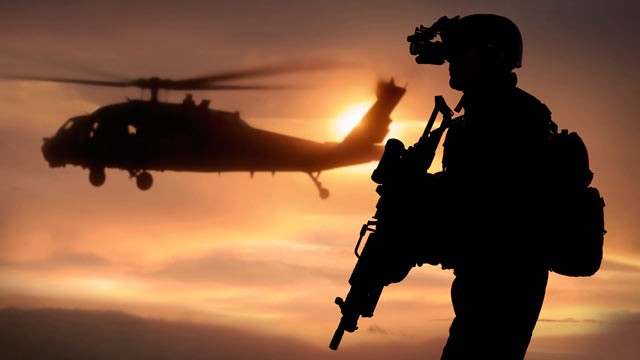
When I sit here today, recollecting the images from my childhood the earliest memories which have left any worthwhile prints on my mid were those of the war of 1965. I was only three, at the time. My father (then Squadron leader Saeed Ansari) was a pilot in active service and carrying out his flying duties from PAF base Masroor (Mauripur as it was called then) in Karachi. I have vivid memories of living in an apartment style officers’ family accommodation. Ours must have been located at the first floor, as I remember we rushed downstairs many times a day during the war. This maneuver usually followed a loud noise of a siren and the sound of airplanes. The roar of several airplanes starting up together at dusk was very unique and produced a deafening noise that I can still hear, almost half a century later. I remember my mother and her friends notably Auntie Rafi (wife of squadron leader Rais Rafi) standing outside the house and counting the number of airplanes flying past our house as their husbands ascended into the skies. They gazed the black silhouettes of the aircraft, till they disappeared into the red horizon of the September sky.


The next scene I can see is that all the wives (of the Pilots) were sitting in the ‘drawing room’ not on the sofas but on a white bed sheet spread on the carpet. All the ladies were either reading the Quran or doing Tasbeeh. It was like a night vigil. It was like their lives were hanging in the balance. It was like a Russian roulette. There was a high chance that one of the men might not return. This pattern repeated night after night after night. I also remember there were times of bouts of laughter followed by long periods of silence. It is now easy to understand why the euphoric episodes during times of extreme stress.


I used to ask my mother when Papa would come back. I was given explanation in a very adult style conversation, that Papa had gone to kill the Hindus and he would come home when he had finished them. I was quite O.K with that explanation. Half an hour later I asked again ‘How many Hindus are left now’. The deafening silence in the room was broken by the faint sound of aircraft approaching from a distance. This had a mixed reaction of joy and anxiety. The ladies would start dialing the squadron headquarters to get information, if all of the pilots had returned safely. A uniform smile across everybody’s face meant that all of them were back. It is also absolutely clear in my memory that my mother would grab me up in her arms and rush towards the road where the squadron bus would drop the pilots to their residence. I remember my father had to walk a short distance from the drop off point to reach home. I remember him wearing his flying attire (coverall) with an additional item, which was a pistol tucked in a holster like a cowboy. This was for his own defense in case he was shot down behind enemy lines.


Six years later in 1971, it was a similar story as far as the families were concerned but this time I was older, I was almost nine. I was petrified of the war. I was more aware of what was going on. There was TV in almost every house broadcasting national songs followed by news and more national songs followed by more news. I could hear my mother crying many a times after hearing the news, as often the names of the Shaheeds announced, were very close family friends with whom my parents has spent good part of their lives in the Air Force. At the time I was too young to understand why these wars were happening, I was satisfied with the holding the belief that we Muslims were winning everything. Little did I realize that there are no winners in wars.


Many years later, I entered the medical field as a doctor and decided to take up surgery as a Profession. This career path took me to Europe, the Middle east, the Far East and Australia. I found that the world had truly become a ‘global village’. I interacted with nationalities from all over. In this day and age any international hospital of any worth has a multinational staff. That includes Indians as well. I interacted with them professionally as well as socially. I found them to be excellent human beings. They laugh like us, cry like us and have all the emotions just like us. In fact having worked as a doctor in eight countries spread over five continents I can almost say that I have operated on every race on earth. Believe me, they all are exactly the same when I opened them up. To put it mildly, ‘it is the same cake with a different icing’.


Few years ago when I was working as a surgeon in Australia, one of my Indian surgeon colleagues invited me to his house for dinner while his mother was visiting him from India and he very much wanted me and my family to taste the ‘Puris’ and Aloo bhaji’ made by his mother's hands. We went for dinner at their place and enjoyed their hospitality par excellence. During the course of the evening we were exchanging various views about Indian customs and Pakistani customs etc, etc and everybody was laughing and enjoying . Then my Indian colleague’s mother told us that her husband was a Pilot in the Indian Air Force and she could recall the 1965 war. Her husband was posted at the Halwara Indian air base. She said ‘I can never forget how terrified we used to be when the Pakistani airplanes used to come at night and drop their bombs. Rajneesh (pointing to my Indian surgeon colleague) was only three at the time and he used to clutch to my neck with fright upon hearing the thunder of the dropping bombs. In the line of duty my father and his colleagues carried out several attacks over the Halwara air base and pounded that air base with bombs as hard as they could. I told her of our suffering on the other side of the border was not much different where a young mother was bracing another three year old who was impatiently waiting for his father. In war there are no winners. It was very strange that two little boys from similar backgrounds on opposite sides of a conflict, per chance grew up to choose the same profession and decades later, meeting each other at an entirely different level.

Whenever I press my rewind button and see these scenes again, and analyze now, sitting in times when I am older and hopefully a bit wiser. I am able to fill in gaps and make sense of many things that were blurred at the time. However, I am sad to say that we as Pakistani people have forgotten our past. We have dispensed with memories of our mistakes as well as ‘our finest hours’. We are just like a rudderless ship caught in a storm in the midst of a rough sea. Look at where India is today and where are we. I don’t know who, how or when did someone sow the seeds of hatred among people inhabiting the troubled colonies of Karachi and other places. These were the people who have lived in relative harmony for years.

This is not much different to how things started in East Pakistan which led to its dismemberment. The basic ingredient here is the same, ‘Seeds of hatred’. When the nation is busy fighting internal insurgencies, it becomes vulnerable to the prying eyes of opportunists. People have no reluctance today, talking about their demands for half a dozen new provinces in Pakistan. It is not rocket science to put these all these on-going events together, and make an intelligent prediction of what we are heading for.


The author is Chief of Surgery at a leading hospital in Riyadh, Saudi Arabia.

Friday, 19 August 2011

Impact of corruption on our society


By Shakil Ahmad | The writer is a retired secretary of the Government of Pakistan. He is a member of the former Civil Service of Pakistan.

To a varying degree, corruption exists in almost all countries. However, the degree to which it impacts the common people’s lives and increases poverty is directly proportional to the level of this scourge and how widespread it is in society. A country’s or province’s development depends on how much of the State’s resources are lost to this ugly practice. In developed countries, where corruption is limited to a small number of projects and where common people do not encounter it on a daily basis, the adverse impact tends to be marginal and does not jeopardise the welfare of its people. In contrast, a poor country like Pakistan, where each borrowed dollar must be spent to uplift the people from poverty, it has a significant impact.

A recent World Bank report lists corruption and lack of transparency as the two core reasons that hamper Pakistan’s drive for development. However, these indices do not convey the terrible pain and sufferings that the brutal practice of corruption has caused to the common people of Pakistan.

Many people in Pakistan believe that much of the development and a significant portion of the operations’ allocations are lost due to bribery and other related illegal and unethical activities. The extreme poverty and lack of infrastructure and basic services in the rural areas of Sindh and Balochistan are in part fuelled by bribery, influence peddling, extortion, and abuse of power. The people and international donors must rise to the occasion and start pressurising Islamabad to curtail corruption and improve governance.

Failure to do so in a timely manner will continue to frustrate the poor people and make them weary of the current democratic system and drive them to extremism.

It is a widely held view that the practice of bribery in Pakistan is widespread, systematic, and that it is entrenched at all levels of government. A World Bank report containing an assessment of the Pakistan’s Infrastructure Capacity (PICA) states that 15 percent of the country’s development budget for 2007-08 was lost in the procurement process alone due to corruption. This does not include subsequent costs of corruption in the implementation and maintenance stages of projects. Important business publications such as World Economic Forum’s Global Competitiveness Report (2007-08) says that corruption is the third greatest problem for companies doing business in Pakistan.

The report lists the first two problems as government bureaucracy and poor infrastructure. The Organisation for Economic Cooperation and Development (OECD) says that the World Bank and the Auditor General of Pakistan have complained about governance problems in recruitment, site selection, absenteeism and bribery. This has resulted in the cancellation or suspension of some of the World Bank’s projects such as the Balochistan Primary Education Project. Also, certain other loans were withheld after irregularities were uncovered.

Corruption is bound to flourish in a culture that encourages display of affluence without any regard as to how the wealth has been obtained. Lack of accountability plays a crucial role in the promotion of bribery and resistance to any form of reform.

To fully respond to the question as to which sectors are most affected by corruption, both quantitative and qualitative, it is worth bearing in mind that some of the reasons for which particular sectors are highlighted more often than others are due not only to objective merits, but also to the facts that:

p There is more research and survey work done in those areas, and;

p Public perception and awareness seem to be more vocal as regards those areas.

Thus, the exercise of highlighting some of the sectors should be read with the knowledge that corruption in Pakistan seems pervasive across most sectors. With that in mind, it is safe to say that expert sources indicate that the sectors among those most affected by it are the police and law enforcement, judiciary and legal profession, power sector, tax and customs, health and education, and land administration

In addition, public procurement seems to be a major concern across most sectors

These sectors seem to be affected by chains of:

p Petty corruption to access public services or to bypass the law (through the direct interaction of citizens with the respective authorities and bribe-paying).

p Middle and grand corruption (in public contracting and procurement as well as direct misappropriation of public funds by senior officials).

p Political patronage, conflicts of interest, influence peddling and other forms of corrupt behaviour are commonplace across the sectors.

The following are some examples of the damage that is caused by corruption: Defective, dangerous and inadequate infrastructure - poor and incomplete roads, badly constructed college buildings, fewer class rooms in schools that are liable to collapse with the first monsoon rains, railway tracks, hospital facilities, water projects, bridges or housing units. Abysmal education standards result when illiterate persons are recruited as school teachers for political reasons.

Many schools all over the country remain without teachers or fewer teachers to effectively educate students. More so, it is futile to talk about technical and engineering schools and the standards they have established. After three years of studies, neither the teacher nor his student knows the use of a drill machine.

Corrupt practices contribute to the inadequate number of beds in hospitals, no medicines for patients, as these are paid for but not procured or disposed of after their delivery at the hospital store. And, of course, there is no fuel in vehicles meant for transporting patients to hospitals. Most experts think that corruption is one of the most difficult problems in Pakistan’s society today. Its impact on the country’s towns and villages is extremely profound and poses a long-term threat to its culture, economics, and general well being of the people and the provinces where they reside.

The future of Pakistan and alleviation of poverty in rural areas of Pakistan is highly dependent on successful completion of all development projects. This success is threatened by the evil of greasing the palm that must be stopped urgently before it is too late. The religious extremism, deteriorating economic conditions, and worsening living conditions are unnerving the people of rural Sindh and Baluchistan, who until now have refused to fall in the trap of extremism.

It is imperative that all stakeholders, including political parties, government officials, civil society organisations, private companies, donor agencies and common people, recognise the carnage that current levels of corruption can do to the heartlands of Pakistan. They must form a grand coalition to stop the menace before it is too late.

Monday, 8 August 2011

Video: Deaths of SEAL Team 6 Exposed


Posted on Pakalert on August 7, 2011
Aaron Dykes & Alex Jones
Infowars.com

Associated Press sources are reporting a statistically impossible tragedy for U.S. forces in Afghanistan– that of the 38 NATO forces killed in a helicopter crash Friday night, “more than 20″ were members of SEAL Team 6, the covert unit that took credit for killing Osama bin Laden in May.

Mainstream sources are seizing upon claims that the Taliban took credit for downing the helicopter, but that means nothing. Media instantly ran reports that al Qaeda was responsible for the bombing & shootings in Norway; moreover, anyone on a message board can make such claims.

Instead, Alex Jones predicted shortly after the raid on bin Laden’s compound that SEALs would soon be reported dead in a helicopter crash or staged incident following multiple reports from military sources who’ve proved accurate in the past, including on-air callers, that SEALs did indeed die during the raid. Official stories admitted after-the-fact that a helicopter went down during the mission, but claimed there were no deaths of U.S. forces.

Below is Alex’s report on the breaking news of SEAL Team 6′s official demise:

Infowars is on the record reporting that members of Seal Team 6 died in the so called OBL raid. The government admits that a super secret helicopter did crash during the OBL raid but says no one died, our intel is different. We predicted that the spin doctors would stage a crash or when a real crash took place that they would say the SEALs died then. This is a old trick that governments all over the world have been caught pulling in the past. Some speculate that Obama had the team killed to cover up what really happened; however our intel does not point that way. The Pentagonmay have blown the helicopter up on the ground on the night of the raid and we cover that in the above video. Lastly the globalist MSM is reporting that terroristhave taken credit but that is notoriously filled with disinfo, like in the Norway attack when a fake terrorist group took credit and the media ran with it.

According to the sources, military personnel internally admit to the SEAL deaths, however it was not clear whether it had been the result of an accidental crash, from a firefight with Pakistani military forces stationed only a short distance from the compound, or whether, as Pakistani eyewitnesses indicated (below), the helicopter exploded after covert forces entered.

Whatever the true story, one thing is clear: dead men tell no tales. The inconvenient truth is that governments throughout history have disposed of heroes, covert troops and special forces to keep the real story from coming out. Helicopter and plane crashes have been one of the favorite methods for tying up these loose ends.

Abbottabad residents told CCTV reporters they don’t believe Osama bin Laden was ever at this compund and that the operation was a ‘hoax’. Pakistan’s anti-terrorist squad also could not confirm the killing, according to reports.

Pakistani eyewitnesses to the Abbottabad raid on Osama’s reputed compound reported that a U.S. helicopter exploded and that Americans died, despite the fact that mainstream media reports claimed no one died in the raid. The crash was reported but remains little explained.

As Dr. Paul Craig Roberts presciently dredged up again only yesterday:

In the immediate aftermath of bin Laden’s alleged murder by the SEALs, Pakistani TV interviewed the next door neighbor to bin Laden’s alleged compound. Someone supplied the video with an Englishtranslation running at the bottom of the video. According to the translation, the next door neighbor, Mr. Bashir, said that he watched the entire operation from the roof of his house. There were 3 helicopters. Only 1 landed. About a dozen men got out and entered the house. They shortly returned and boarded the helicopter. When the helicopter lifted off it exploded, killing all aboard. Mr. Bashir reports seeing bodies and pieces of bodies all over.

The US government acknowledges that it lost a helicopter, but claims no one was hurt. Obviously, as there were no further landings, if everyone was killed as Mr. Bashir reports, there was no body to be dumped into the ocean.

SEAL Team 6 was formally dissolved in 1987, becoming the Naval Special Warfare Development Group, with its command structure transferred to Joint Special Operations Command. The unit’s true nature and even numbers are unknown.

This May 17 Navy Times article would revise the official account of events, admitting to the crash incident:

Aboard two Black Hawk helicopters were 23 SEALs, an interpreter and a tracking dog named Cairo. Nineteen SEALs would enter the compound, and three of them would find bin Laden, one official said, providing the exact numbers for the first time.

Aboard the Chinooks were two dozen more SEALs, as backup.

[...] The plan unraveled as the first helicopter tried to hover over the compound. The Black Hawk skittered around uncontrollably in the heat-thinned air, forcing the pilot to land. As he did, the tail and rotor got caught on one of the compound’s 12-foot walls. The pilot quickly buried the aircraft’s nose in the dirt to keep it from tipping over, and the SEALs clambered out into an outer courtyard.

[...] It took approximately 15 minutes to reach bin Laden, one official said. The next 23 or so were spent blowing up the broken chopper, after rounding up nine women and 18 children to get them out of range of the blast.

Wednesday, 3 August 2011

Gift of blood ends a Pakistani town’s bloody history

By Rick Westhead
South Asia Bureau

BASTI MAHRAN, PAKISTAN—A single act of kindness, profound because it was so rare and unexpected, transformed this sun-bleached village in a remote corner of the Punjab.


A Hindu man gave his blood to save the life of a Muslim woman who had lost too much in childbirth.
In the seven years since, the 1,600 Muslims and 1,400 Hindus in this town live in peaceful co-existence, extraordinary because sectarian violence has marked the histories of Pakistan and India since the bloody partition of 1947.


“I was afraid, for sure. But it was the right thing to do,” says Bachu Ram, the blood donor. He is smoking a cigarette in the home of a Muslim village elder, who once was so steeped in hatred that he led the charge on the clinic to take Ram’s life.
Hatred and violence once defined life in Basti Mahran. Muslim men routinely raped Hindu girls — “we would have 20 cases a year,” says one local. Muslim men beat Hindus with sticks and fists, seemingly with tacit approval of the local police. Cattle belonging to Hindu families were slaughtered if they strayed too close to Muslim homes.


Mahar Abdul Latif, the host who now pours Ram tea, spent three years during the late 1990s as a member of the extremist religious group Jaish-e-Mohammad. He patrolled the rugged mountain passes and valleys of Kashmir, a region claimed both by India and Pakistan, killing Hindus when they crossed his path.
“I have done much I am ashamed of,” says Latif, a 37-year-old father of three. “But we are friends now. Our kids are friends, too. They study and play together.”


Latif and other local Muslims gave their time and money last year to refurbish a temple dedicated to the Hindu god Hanuman. Muslims visit the temple when their neighbours celebrate Diwali, the Hindu festival of lights. Hindus respond in kind, joining in Muslim holiday celebrations.
This village’s transformation seems to have happened in a moment.


The medical clinic was only open for a three-day health-care blitz when the young mother arrived suffering from severe blood loss and needing an infusion of O-negative blood. The doctors couldn’t find a donor.
Ram made his offer. As word spread among the village’s Muslims, Latif led the charge on the clinic. It had always incensed him that the doctors rejected his demand for two separate camps, partitioned facilities so that instruments used on Hindus could not be used on Muslims.


Outside the clinic, a doctor intercepted Latif and told him the only chance the woman had was Ram.
“I don’t know what came over me,” Latif says. “I remember thinking that here we were refusing to even shake hands with the Hindus and he was willing to give us his blood. It was a marvelous thing he did. It was the turning point of my life.”
The next day, Latif went to say thank you. It’s said to be the first time a Muslim had ever gone to a Hindu’s home.
Word of Ram’s charity and Latif’s remorse spread through Basti Mahran.


Muslim and Hindu women began talking to each other. Rapes virtually disappeared. Eventually, a single tin-roofed cowshed was built to house all of the village’s 3,000 cows, sheltering them from the scorching desert sun.
“That was a big deal,” Ram says. “Before, you would not see the cows near each other at all. A Muslim would not have touched the milk from a cow owned by Hindus.”


Standing in Basti Mahran’s round, thatch-roofed Hindu temple, 65-year-old Sobha Ram says he can’t believe the changes in the village.
“For years, we lived in fear of the Muslims but not now,” he says, cleaning photos of Hindu gurus and adjusting strings of paper flowers and glitter paper.
The odds seemed against peace in this village.


In 1947, the year of partition, Hindus made up 15 per cent of Pakistan’s population. But soon many migrated to India, seeking a better, safer life. The same happened with Muslims who lived in India and moved west.
Political leaders seemed ready to highlight the differences between the cultures, rather than their many similarities.
“The Hindus and Muslims belong to two different religious philosophies, social customs and literature,” said Muhammad Ali Jinnah, Pakistan’s founding father. “They neither intermarry, nor interdine together, and indeed they belong to two different civilizations.”


Today, just 2 per cent of Pakistan’s 170 million residents are Hindu.
Yet the Hindus in Basti Mahran didn’t seek refuge elsewhere.
“We were born here and we don’t know anyone in India. Even though we are Hindu, we are still Pakistani,” says Sobha Ram. “The few people who did want to go couldn’t afford it.”


The changes have had a direct impact on the quality of life, and have helped earn better incomes.
Hindu and Muslim women are working together to sell cotton to wholesaling middlemen, earning 200 rupees ($2.50) for a 40-kilogram bag of cotton, four times what they earned when they sold their cotton separately.
“You even see women travelling together unaccompanied by men to places like Lahore and Islamabad,” says Razia Malik, an aid worker who has spent time in Basti Mahran.


Communal harmony aside, it’s still a difficult life here.
Each morning, women set out in stifling 40-degree heat on a four kilometre-walk to collect the day’s drinking water. Cows have to be shepherded eight kilometres daily to their water supply.


Most don’t have enough money for feed for their cows, which graze on the Spartan green bushes that dot the desert plains.
Now that they aren’t fighting each other, Basti Mahran’s Muslim and Hindus are working to demand a new road through the village and they have asked the state government to extend water pipes here. Last year, they successfully lobbied for power lines that provide electricity for at least 12 hours a day.


“We’ve been so wrong about the Hindus,” Latif says, watching his 7-year-old son Osama play alongside Ram’s 11-year-old boy Sindhal Ram. “The biggest surprise has been that they are just like us. They want to live their lives the same way we do.”

Wednesday, 13 July 2011

Time to exit, but wait!


Eric S. Margolis (veteran US journalist)
27 June 2011, 7:22 PM

“Far-called our navies melt away

On dune and headland sinks the fire

Lo, all our pomp of yesterday

Is one with Nineveh and Tyre! “

-           Rudyard Kipling Recessional

War is waged to achieve political objectives, not to kill enemies.   In this sense, the United States has lost the 10-year Afghan conflict, its longest war.  Afghanistan remains the “graveyard of empires.”

The US has failed to install an obedient regime in Kabul that controls Afghanistan. It has made foes of the Pashtun majority, and, in pursuing this war, gravely undermined Pakistan. Claims that US forces were in Afghanistan to hunt the late Osama bin Laden were widely disbelieved.

Last Wednesday, President Barack Obama bowed to public opinion, approaching elections, military reality and financial woes by announcing he would withdraw a third of the 100,000 US troops from Afghanistan by the end of next summer. Pentagon brass growled open opposition.

US allies France and Germany announced similar troops reductions. All foreign troops are supposed to quit Afghanistan by the end of 2014.

Washington currently spends at least $10 billion monthly on the Afghan war, not counting “black” payments, CIA and NSA operations. The US has poured $18.8 billion in development aid into Afghanistan since 2001 with nothing to show for the effort. Pakistan has been given $20 billion to support the Afghan War.  The US deficit is heading over $1.4 trillion. The national debt, when unfunded pensions and benefits are added, is likely $100 trillion, according to the chief of PIMCO, the world’s largest bond trader.

Forty-four million Americans now receive food stamps; the national infrastructure of roads, airports, bridges and schools is crumbling from neglect. Unemployment, officially at 9.5 per cent, is probably closer to 20 per cent.

The cry is being heard: “Rebuild America, not Afghanistan.”

In spite of intense pro-war propaganda, over half of Americans now oppose the Afghan War. Even US-installed Afghan president Hamid Karzai calls it, “ineffective, apart from causing civilian casualties.”

So will the US really pull out of Afghanistan? That remains to be seen. There are contradictory signs.

Mid-level talks between the US and Taleban are under way. The US will probably keep some of its remaining 66,000 soldiers in Afghanistan after 2014, rebranding them training troops. The huge US bases at Kandahar and Bagram will be retained. 

Billions more will be spent on the Afghan government army and police. They have so far proved ineffective because most are composed of Tajik and Uzbek mercenaries who are hated and distrusted by the Pashtun.

A similar process is underway in Iraq where “withdrawal” means keeping renamed US combat brigades in Iraq, thousands of mercenaries, and US combat forces in neighbouring Kuwait and the Gulf. New US embassies in Baghdad and Kabul – huge, fortified complexes with their own mercenary combat forces – will be the world’s biggest. Kabul will have a staff of 1,000 US personnel. Bin Laden called them “crusader fortresses.”

In addition, the US will still arm and finance allied Tajik and Uzbek militias in Afghanistan. Financing Pakistan’s US-backed regime and Uzbekistan must also continue at around $3 billion yearly.  The US appears to be going and staying at the same time. By contrast, Taleban’s position is clear and simple: it will continue fighting until all foreign troops are withdrawn. US Special Forces, drones and hit squads have been unable to assassinate enough Taleban commanders to make the mujahidin stop fighting.

Americans never study history, not even their own. They don’t recall founding father, the great Benjamin Franklin, who said, “there is no good war, and no bad peace.” Or that the Pashtun Taleban and its allies are fierce, dedicated, undefeated warriors. I’ve been in combat with them and remain in awe of their courage and love of combat. The Pashtun mujahidin will keep fighting as always, as long as their ammunition lasts.   

America, for all its B-1 heavy bombers, strike fighters, missiles, helicopter gunships and drones, armour, super electronics, spies in the sky and all the other high tech weapons of modern war has failed to defeat some 30,000 tribal fighters with nothing more than small arms and legendary valour.  

The US has lost the all important military initiative in Afghanistan.  It may linger there, but it cannot win.

Eric Margolis is a veteran US journalist

Friday, 10 June 2011

Thursday, 2 June 2011

God Is Not a Christian

Desmond Tutu

Desmond Tutu

1984 Nobel Peace Prize winner

Posted: 06/ 1/11 09:25 PM ET


The following is excerpted from the Archbishop Desmond Tutu's new book, 'God Is Not A Christian: And Other Provocations.'

This talk also comes from a forum in Britain, where Tutu addressed leaders of different faiths during a mission to the city of Birmingham in 1989.

They tell the story of a drunk who crossed the street and accosted a pedestrian, asking him, "I shay, which ish the other shide of the shtreet?" The pedestrian, somewhat nonplussed, replied, "That side, of course!" The drunk said, "Shtrange. When I wash on that shide, they shaid it wash thish shide." Where the other side of the street is depends on where we are. Our perspective differs with our context, the things that have helped to form us; and religion is one of the most potent of these formative influences, helping to determine how and what we apprehend of reality and how we operate in our own specific context.

My first point seems overwhelmingly simple: that the accidents of birth and geography determine to a very large extent to what faith we belong. The chances are very great that if you were born in Pakistan you are a Muslim, or a Hindu if you happened to be born in India, or a Shintoist if it is Japan, and a Christian if you were born in Italy. I don't know what significant fact can be drawn from this -- perhaps that we should not succumb too easily to the temptation to exclusiveness and dogmatic claims to a monopoly of the truth of our particular faith. You could so easily have been an adherent of the faith that you are now denigrating, but for the fact that you were born here rather than there.

My second point is this: not to insult the adherents of other faiths by suggesting, as sometimes has happened, that for instance when you are a Christian the adherents of other faiths are really Christians without knowing it. We must acknowledge them for who they are in all their integrity, with their conscientiously held beliefs; we must welcome them and respect them as who they are and walk reverently on what is their holy ground, taking off our shoes, metaphorically and literally. We must hold to our particular and peculiar beliefs tenaciously, not pretending that all religions are the same, for they are patently not the same. We must be ready to learn from one another, not claiming that we alone possess all truth and that somehow we have a corner on God.

We should in humility and joyfulness acknowledge that the supernatural and divine reality we all worship in some form or other transcends all our particular categories of thought and imagining, and that because the divine -- however named, however apprehended or conceived -- is infinite and we are forever finite, we shall never comprehend the divine completely. So we should seek to share all insights we can and be ready to learn, for instance, from the techniques of the spiritual life that are available in religions other than our own. It is interesting that most religions have a transcendent reference point, a mysterium tremendum, that comes to be known by deigning to reveal itself, himself, herself, to humanity; that the transcendent reality is compassionate and concerned; that human beings are creatures of this supreme, supra mundane reality in some way, with a high destiny that hopes for an everlasting life lived in close association with the divine, either as absorbed without distinction between creature and creator, between the divine and human, or in a wonderful intimacy which still retains the distinctions between these two orders of reality.

When we read the classics of the various religions in matters of prayer, meditation, and mysticism, we find substantial convergence, and that is something to rejoice at. We have enough that conspires to separate us; let us celebrate that which unites us, that which we share in common.

Surely it is good to know that God (in the Christian tradition) created us all (not just Christians) in his image, thus investing us all with infinite worth, and that it was with all humankind that God entered into a covenant relationship, depicted in the covenant with Noah when God promised he would not destroy his creation again with water. Surely we can rejoice that the eternal word, the Logos of God, enlightens everyone -- not just Christians, but everyone who comes into the world; that what we call the Spirit of God is not a Christian preserve, for the Spirit of God existed long before there were Christians, inspiring and nurturing women and men in the ways of holiness, bringing them to fruition, bringing to fruition what was best in all. We do scant justice and honor to our God if we want, for instance, to deny that Mahatma Gandhi was a truly great soul, a holy man who walked closely with God. Our God would be too small if he was not also the God of Gandhi: if God is one, as we believe, then he is the only God of all his people, whether they acknowledge him as such or not. God does not need us to protect him. Many of us perhaps need to have our notion of God deepened and expanded. It is often said, half in jest, that God created man in his own image and man has returned the compliment, saddling God with his own narrow prejudices and exclusivity, foibles and temperamental quirks. God remains God, whether God has worshippers or not.

This mission in Birmingham to which I have been invited is a Christian celebration, and we will make our claims for Christ as unique and as the Savior of the world, hoping that we will live out our beliefs in such a way that they help to commend our faith effectively. Our conduct far too often contradicts our profession, however. We are supposed to proclaim the God of love, but we have been guilty as Christians of sowing hatred and suspicion; we commend the one whom we call the Prince of Peace, and yet as Christians we have fought more wars than we care to remember. We have claimed to be a fellowship of compassion and caring and sharing, but as Christians we often sanctify sociopolitical systems that belie this, where the rich grow ever richer and the poor grow ever poorer, where we seem to sanctify a furious competitiveness, ruthless as can only be appropriate to the jungle.

Thursday, 26 May 2011

How one TV reporter tried to reveal the underbelly of the Pakistani media

SLATE

The Ombudsman

By Christopher Beam

Posted Friday, May 20, 2011

ISLAMABAD, Pakistan—Last November, 30 of Pakistan's most influential journalists boarded a plane bound for Saudi Arabia. The occasion was the hajj, the annual pilgrimage to Mecca that Muslims are expected to perform at least once in their lifetimes, if they can afford it. On this trip, however, money wasn't a problem: The Pakistani government picked up the tab.

For months, the story of the government-sponsored hajj went unreported. The fact that reporters were accepting gifts from the government hardly qualified as news. Plus, reporters in Pakistan have an unspoken rule, a kind of omerta: You don't write about other reporters.

Unless you're Matiullah Jan. Jan, an anchor for Dawn News in Islamabad, launched a new show in January called Apna Gareban—the name means "under our collar," an Urdu idiom that translates as "our own underbelly"—in which Jan investigates the conduct of his fellow journalists. On the show, he acts as a kind of one-man ombudsman for all of Pakistan, badgering reporters, ambushing them Bill O'Reilly-style, and guilt-tripping them on air for their alleged misdeeds—behavior unheard of in the Pakistani media. "This is a very revolutionary thing," says Mehmal Sarfraz, op-ed editor at the Daily Times in Lahore. "Somebody had to do it."

In February, Jan aired an hour long report outing the journalists who visited Mecca on the government's dime. Many of the reporters defended themselves. One said God had called him to Mecca, and he had to obey, despite having gone on hajj twice before. "God called you three times?" Jan asked, incredulous. Others said they didn't know where the funds had come from, and they never bothered to ask. Pakistan's supreme court soon ordered the reporters to pay back the money, though some have appealed the decision.

The issue wasn't necessarily that journalists had taken a trip that was paid for by the government; journalists, Pakistani and otherwise, do that all the time. (This article, in fact, was made possible by the East-West Center, which organized a trip to Pakistan funded by the U.S. State Department.) The trip to Mecca wasn't a reporting trip—some journalists even brought their families—nor was it acknowledged publicly until Jan brought the issue to light.

The growth of the Pakistani media over the last decade has exacerbated journalistic corruption. Newspapers flourished in the 1980s and '90s, but there was only one cable TV channel, the state-run Pakistani Television. That changed in 2003, when Gen. Pervez Musharraf, frustrated that Pakistanis were getting much of their news from India, relaxed the ban on cable channels, or "electronic media." The medium boomed, as Pakistan went from one cable TV station to dozens in 2011.

As the sector has grown, so has its power. "The media is more unrestrained now than ever," says Najam Sethi, a columnist and the editor of the Friday Times in Lahore. "We can get away with murder." Sensationalism abounds, fact-checking is a foreign concept for many outlets, and TV reporters who have rushed in to fill the media vacuum often have no journalistic background. The agency that regulates cable channels, the Pakistan Electronic Media Regulatory Authority, prohibits content that is "defamatory or knowingly false," but it rarely takes action.

Many Pakistani journalists accept gifts from politicians, presumably in exchange for favorable coverage. Less blatant forms of corruption—caving to threats from militant groups after a suicide attack by replacing the word "died" with "was martyred," for example—are common. In the most egregious cases, "reporters" aren't reporters at all but simply businessmen with press cards who use their access to the press to help friends, punish enemies, and blackmail law enforcement. If you're pulled over by a traffic cop and you have a press card, says Jan, you don't have to pay.

Yet the media rarely critiques itself. Only one Pakistani newspaper, the Express Tribune, has hired an ombudsman, and his mandate is limited to that paper. He doesn't write a column, either—he just handles reader complaints in-house. Media "navel-gazing" may have a bad name in the United States, but the Pakistani media's belly could use some inspection.

That was Jan's thinking when he created Apna Gareban. The purpose was to turn the same critical eye on journalists that they turn on politicians. Jan has worked for several years as a court reporter for Dawn News in Islamabad. "In court, we talk about right and wrong, black and white, accountability, justice, equality of treatment before the law," he says. But those terms are almost never used in conversations about the press. "All of the sickness of society is being scrutinized by the media, but the media is not being held accountable itself." Apna Gareban became the first major TV program to dig into the backgrounds of influential journalists, essentially making Jan the ombudsman for all of Pakistan.

In the first episode, Jan visits the federal government's Press Information Department, where publishers—and often reporters themselves—go to solicit government ads. (A big chunk of the ads that appear in Pakistani newspapers and on TV are paid for by the government, usually to promote new projects or to congratulate officials for their achievements.) There, he interrogates a reporter who's asking for ads. "If they don't give you ads, do you publish stories against them?" says Jan. "Well, they do give us ads," says the reporter, "so why should we say anything against them?"

The transactional relationship between the government and the press is a recurring theme. In one episode, Jan examines the 290 million rupee ($3.4 million) "secret fund" set aside by the Information Ministry for journalists. The fund covers everything from buying ads in newspapers to providing medical care for reporters to paying for their daughters' weddings. All this is to the good, former Information Secretary Ashfaq Gondal tells Jan: "There is no one to look out for the welfare of these journalists." Jan plays along. "These are great deeds," he says. "So why would you keep this a secret?" Gondal responds that the purpose of the information ministry is "to establish a sort of goodwill within the populace so that the populace tilts toward progress and keeps up with the times." What better way to "establish goodwill" than to buy off the press?

Another episode focuses on the awarding of lavish government housing to top-tier Pakistani journalists at cheap rates. Jan kicks off the program by reading the names of the 24 journalists, displaying their pictures, and describing their homes and how much they pay in rent. When confronted, one reporter insists it's his "right" to get preferential treatment. Another compares his situation to that of a BBC reporter, whose salary is subsidized by the government. "Do BBC's journalists get premium apartments from their rulers?" asks Jan. "I don't have that information," says the reporter. "Forget information," says Jan, "they don't get any, you know this."

Jan's interview technique, a one-two combo of logic and shame, drives his subjects into contortions. At first, the well-known anchor Asma Shirazi defends her decision to go on the government-funded hajj by saying she was misled about its funding. Then she says that even if she knew it was publicly funded, she would have gone anyway. Then she accuses Jan of failing to go after the "real big criminals," like journalists who take land as bribes. Finally she agrees to pay back the money.

Jan is more than happy to play populist demagogue, despite being the son of a retired Army colonel and living in a relatively comfortable neighborhood of Islamabad. "The taxpayers are hungry for food and thirsting for water," he tells Shirazi, "scrounging for every cent they can get, and instead you spent hundreds of thousands of rupees to go on a free ride to the pilgrimage."

His crusade hasn't exactly endeared him to his colleagues. "Watching fellow journalists squirm" is "painful," writes Steve Manuel, who worked at Pakistani newspapers for 25 years and founded the website Journalism Pakistan. "There are other ways to expose such people … tattling on fellow journalists is not one of them." Manuel also argues that Jan could be more critical of his bosses. "Why not also highlight the corruption practiced and encouraged by big media houses including Dawn?"

Jan says he's been careful to investigate his friends, too. And he's paid a price. For one episode, Jan invited prominent columnist and longtime friend Rauf Klasra onto the show to explain why he lives in a high-end government residence. "I told him at the start of the show, we're not friends in the studio—I'm a journalist and you're a journalist," says Jan. During the interview, Klasra turned the tables on Jan by producing documents that accused the CEO of Dawn Media Group, Hameed Haroon, of corruption. Jan invited Haroon onto the show on the spot, but he never came. Jan and Klasra's friendship hasn't recovered.

The most profound moments of Jan's program are not his attacks on the media, but what they reveal about broader systemic problems in Pakistan. When Jan asks a judge why he doesn't punish media organizations that fail to pay their journalists—not uncommon in Pakistan—the judge blames the system. "I really want to prosecute them," the judge says, and salary issues fall squarely within his jurisdiction. But "there's always a reason or a loophole that the defendant exploits to circumvent penalization." Even when the judge orders someone to appear in court, they often don't show up. "I tell the police to summon the person to court, and they come and tell me the person is unavailable. What am I to do?"

In April, Apna Gareban was shut down after 12 episodes. The final straw was an investigation into the conduct of a reporter at Dawn News, Jan's employer, who was making money on the side by selling goods from a kiosk provided by the government—a clear conflict of interest. "We knew [Apna Gareban] was going to be an experiment," says Jan, who has returned to reporting on the courts full time. "I'm reconciled to the fact that there were pressures on the organization from the highest levels of the media industry." The journalists who'd been exposed were angry, and media owners were worried they'd be next. "They looked in the mirror and saw what they looked like," says Jan. "Then they decided to break the mirrors instead of washing their own faces."

Tuesday, 24 May 2011

A STUDY OF WHAT CHINA AND PAKISTAN CAN DO FOR EACH OTHER

by Mohammed Sulaiman Abbasi


I am a Mechanical Engineer by training and profession. Being an Engineer, I have been trained to look at a problem and devise simple, cheap and practical solutions. It bothers me to no end that my country just seems to slide further and further down a slope from where there seems to be no recovery. I have been racking my brain to find a way out for my country for it present state of turmoil.

I have looked at Pakistan and its multitude of problems and to my Engineer’s mind the following seem to be worthy of attention. These are listed in order of importance.

1 – Crippling Debt

2 – Poor Economic performance (growth, low GDP etc)

3 – Illiteracy

4 – Erosion of moral values.

I have not even bothered to list, power cuts, growing gap between the rich and poor, the very strange political setup or even the issue of personal safety, terrorism etc.

As I have said, I am a simple Engineer with a simple view of the world. I am of the beliefs that if 1-4 are addressed; all other ills of my country will automatically fall in place.

Crippling Debt & Poor Economic Performance

Over the years, Pakistan has mismanaged its economic affairs. Balance of payments is totally skewed. Govt. expenditures far outstrip income. Over the years the country has become dependent on handouts from the US called “aid packages” etc. On top of the aid packages, Pakistan has taken loans from the World Bank and the IMF. As all of us know that once you owe money you are forced to dance to the tune of your creditors.

What is absolutely necessary is for Pakistan to get back on track is to rid itself of debt.

The way I see it is that Pakistan has to develop the industrial base. Mind, that the selection of the type of industry has to be done carefully with an eye on export oriented strategy. This will lead to the following:

a – Create jobs

b – Improve balance of payments by industrial output earning foreign exchange.

Of course, you may say, “It is easier said than done”. What needs to be done is to get 100% of the debt be paid off and we need to say to America, “Thank you for all you help but we don’t need any help”.

My proposal is rather simple.

We have very few allies left today. One of them is China. China and Pakistan have a very special relationship. Right from the start in 1947, China has stood by Pakistan. To be fair, Pakistan has been invaluable to China as well. A great deal of arms technology has reached China through Pakistan during the time when China was a closed country.

Chinese are a wise people not easily swayed by world events. They are not easily intimidated by the Americans. The Chinese are cautious people. Pakistan needs form a business alliance with China. Get China to pay off 100% of all monies owed to all the agencies to whom we owe money to in exchange for something China needs. Stop any and all money, technology, assistance, involvement (security related or other) from the USA. It is no secret that USA has not proved a friend of Pakistan and it has no sympathy for this country. The only country USA cares for is itself. We have been used and abused by America for its own gains. I do not blame the USA for this but it us and our short sightedness to blame! As the saying goes, “If you sleep with dogs you will get up with fleas”. Today we are totally flea ridden!

The question one can ask is why would China want to pay off Pakistan’s debt? We have nothing to offer them. Actually, I think there is something we can offer them. At the end of the day it is business. A business deal is where two parties can benefit from each other. We have already determined that Pakistan will benefit from China by it paying off Pakistan’s loan; but what does Pakistan have to offer China?

China has a huge growing giant of an economy. It has a huge hunger to fuel this economy, it needs to grow. The problem is that being a wise nation, China does not want to open up all its provinces too quickly to this economic revolution. China is a communist nation and new to this economic revolution. Wisely, it is cautious not to expose the whole county to this revolution and limiting this phenomenon to a few cities/areas (Shanghai, Beijing to name a few). What Pakistan can offer is full and free access to its land and warm waters of the Arabian Sea by hosting the Chinese explosion.

The business proposition Pakistan needs to work with China is that in exchange for paying off its debt, China can build as many factories it wants and take all profits from such investments – no questions asked. Mind you, the deal should include turn over of ownership to Pakistan after 20 years. If you look at the proposition from China’s point of view, in exchange for paying off Pakistan’s debt it will gain free access to land upon which it will build industry whose output will enter the world from the ports of Pakistan. What China needs to work out is the payback period for the original debt plus the investment of the huge industrial base it will setup in Pakistan. Usually viable business venture have a payback of 3 - 5 years. Having the ownership turn over of 20 years will give China ample time to turn a good profit.

By default, if China has to make money with its new industrial base, it will have to renovate the Pakistan’s tattered infrastructure to support the huge growth that will come. The salary scales in Pakistan are still low enough for Chinese firms to turn an easy profit by remaining competitive on the international market.

What Pakistan gains will be freedom form its debt and a creation of jobs at a level never imagined possible. There will inevitably be a sprouting of support industries around the main Chinese investment. Within a period of about 7 – 10 years the economy of this nation can be turned around and can come close to having a growth figures enviable by others.

In the above model, the economy of the country will be divided into two parts. (A) The economy driven by Chinese investment. Where all profits from this investment will be bagged by China. No taxes will be levied on this output so as to allow China to produce with the lowest overheads. (B) The economy of Pakistan in almost its present form. Its present industrial units, agricultural base and so on. Pakistan will continue to earn income from the usual taxes and export as it does now. The difference being that it will no longer have to pay anything towards its debts. The additional deposable income now available will be spent on education, developing infrastructure (along with the Chinese) and security.

Chinese investment towards industry can be in the form if industrial estates that can be guarded as in Al-Jubail Industrial City with limited access and the requirement of an official ID cards for the workers to enter. Certainly we cannot ignore the terrorism factor that will play to destabilize the Chinese onslaught of investment.

Electric power to support this level of investment will have to be via additional hydro electrical units or perhaps Nuclear Energy. There are vast reserves of coal that my also be used to generate energy. This will lead to environmental pollution, but, at this stage we cannot afford to be sensitive to such matters.

Note: Present level of expenditure on the defense needs to continue unchanged. I believe that we need our Air Force, Navy and the Army to be the strongest it can be. It should be so strong that any nation, USA, India, Afghanistan or any other are forced to think 10 times before taking us on.

Illiteracy

With a population of about 60% under the age of 15 years, Pakistan will have to think radically outside the box.

Education up to the tenth grade has to be made compulsory. Teacher’s pay scales have to be revised to the point where teaching becomes a profession of choice attracting the finest minds.

We have enough Educational institution turning out Degree holders but the quality of curricula is very poor. We do not have any institutions that can lay claim to being the best, or second best or third best even the 50th best in the world. Our degrees are not recognized anywhere. Yes our professionals work all over the world but never as fresh graduates. What needs to be done is not to increase the number on Universities but to improve the quality of the output.

Not every child needs to become an Engineer, Doctor, Lawyer etc. mainly because the Pakistani Economy can only support just so many Professionals. However what is missing are Polytechnic institution turning out a trained work force. Our work force learns on the job from the “ustaad”. This is not a desirable state of affairs. Polytechnic institutions will invaluable in turning out skilled work force that will be ready to take up jobs in the Chinese industrial base proposed above.

Some of the funds now available to the Government as no more payments toward debt are necessary needs to be diverted to the Universities for the purpose of Research and Development.

There is another problem prevalent in the villages. This problem can be summed up as the resistance to the advent of education of the farmers by the feudal land lords. The fear being that if the common villager became educated then the power he has over them will erode in time. Thus it is often the case that teacher sent to a particular village is chased off and the government built school is used to house the cows of the feudal land lord. To address this situation, the school inspectors have to be empowered to stand up to the feudal lords with out any fear. They need to be accompanied by a group of armed police while doing village school inspections. Salaries of the School Inspectors need to be at a level that makes bribery pointless.

All village schools need to be to the matriculation level.

Once hope returns to the masses that education is the path to self betterment, the need for parents to enroll their children in Madrassas where some fool does systematic brain washing of young minds will eventually stop.

At the end of the day we all want peace, three decent square meals a day and hope for a bright future. A place where or kids will have a decent life. All of the above are deeply linked to the economic growth of a nation.

Moral Values

This is a tough one. We have reached a stage where the line between right and wrong no longer exists. Our moral fiber has been damaged beyond repair.

If I look back to my youth, it was my father who taught me to be honest no mater what. His vision of right and wrong was as sharp as a needle. He taught me never to loose sight of right and wrong even if it meant that by remaining truthful, I may suffer a loss. Never to lie, have the courage to say “What you are doing is wrong”.

How many fathers take the time and coach their sons on right and wrong. Judging from the rampant dishonesty and corruption in my country – not many.

Today an honest Policeman, Customs officer etc (if you can find one) is immediately transferred because he refuses to play ball. Our moral fiber has degenerated to a point where an honest person is referred to as “innocent”, “buffoon” or simply unworldly wise. It has been decades since I have heard any one call himself “sufaid poosh”. Instead of being proud of being “sufaid poosh”, we are ashamed. In our society, the more crocked one is and the more money one amasses by illegal means is directly proportional to the respect he is given.

Isn’t that a shame?

So how to restore our nations moral fiber? That is indeed a tough one.

It is our religious leaders (imams) who are responsible for taking care of the nation’s moral fiber. But our imams are ill equipped to carry out the sensitive task entrusted to them. Instead they have their own agendas of invoking young impressionable minds towards violence.

All imams must be certified to be able to hold that position. All imams must be graduates of an Islamic University and must have at least a BA degree in Islamic Studies with a minor in Education as a minimum qualification before he is able to hold a microphone in the Masjid. Additionally, they must be on the Ministry of Religious affairs payroll. The Friday “khutba” must be an official document prepared by the Ministry of Religious affairs. All imams must stick to this document during the Friday sermon.

It is sad to say that despite the steps mentioned above there is little hope restore our moral fiber. Perhaps a more radical approach will be to start with the three year olds and build an entire new generation of morally true nation.

As I said this is a very difficult task to do with desirable outcome.

In Summery, it is not an easy task to turn around my country but until and unless a major, radical change from the root up is brought about there is very little hope. In fact chances are that if left to its own devices, this country will most certainly be carved up by USA. USA will engineer its breakup with the North seceding to Afghanistan and Punjab/Kashmir to India. Perhaps Baluchistan may become a new independent country and so may Sindh. It is hard to say what will become of Pakistan.

Nothing is impossible as long as there is a will to do so. One thing is for certain, we just cannot allow Pakistan’s to remain in its present state.

Sunday, 22 May 2011

Rs 1,000,000,000,000 Black Hole.

by Khurshid Anwer

Dr Farrukh Saleem’s comments on the national budget:

Rs 1,000,000,000,000 is the difference between what the Government of Pakistan (GOP) earns and what it spends.

GOP looses Rs 300 crore a day, every single day.

Rs 11 crore per hour or Rs 20 lakh per minute for every single minute of the entire year.

GOP would have lost Rs 60 lakh by the time you will finish reading this brief commentary.
GOP is now less of a government and more of a black hole. When nature creates a black hole, nothing can come out of it because its density and gravity increases to infinity while its size shrinks to zero.

Pakistan’s one trillion rupee black hole created by the GOP has no chance of shrinking because it is just like cosmic drain which is going to suck jobs, dreams, aspirations and wishes of the Pakistani public.
Presidency cannot survive without a Rs 3.5 crore injection a month, every month of the year.

The PM Secretariat cannot survive without devouring Rs 50 crore a year.
The Cabinet Secretariat with an army of ministers gobbles up Rs 100 crore a month.

Then there are ‘developmental funds’ – nay political bribes – to be paid to all of our honourable legislatures.

At 100 senators, 342 MNAs and 728 MPAs that’s a cool Rs 300 crore a month down the drain every month of the year. Imagine; lawmakers doing gutters.


Then there are at least half a dozen black holes within the real black hole;

-                           Pakistan International Airlines,

-                           Pakistan Steel Mills,

-                           Pakistan Electric Power Company,

-                           Pakistan Railways,

-                           Pakistan Agriculture Storage and Utility Stores Corporation.

Among them they loose at least Rs 250 billion a year or Rs 70 crore a day, every day of the year.

Then there are others:

-                           Tomato Paste Plant,

-                           Roti Corporation of Pakistan,

-                           Pakistan Stone Development Company,

-                           Pakistan Hunting and Sporting Arms Development Company,

-                           National Institute of Oceanography,

-                           Pakistan Gems & Jewellery Development Company,

-                           Technology Commercialisation Corporation of Pakistan,

-                           National Industrial Parks Development & Management Company,

-                           Technology Up-Gradation and Skill Development Company,

-                           National Productivity Organisation,

-                           Centre for Applied & Molecular Biology,

-                           Council for Work and Housing Research,

-                           National Institute of Electronics,

-                           Pakistan Council for Science and Technology,

-                           Pakistan Council of Research in Water Technology,

-                           Pakistan Council of Scientific and Industrial Research,

-                           Pakistan Standards and Quality Control Authority,

-               Central Inspectorate of Mines.
Wait there are more:

-                           National Insurance Corporation,

-                           Heavy Electrical Complex,

-                           Machine Tool Factory,

-                           Services International,

-                           National Power Construction Company,

-                           National Fertilizers Corporation,

-                           State Engineering Corporation,

-                           National Construction Limited,

-                           Pakistan Steel Fabricating Company Limited,

-                           Pakistan Mineral Development Corporation,

-                           Ghee Corporation of Pakistan,

-                           Republic Motors,

-                           Pakistan National Shipping Corporation,

-                           Pakistan Railways,

-                           State Cement Corporation of Pakistan,

-                           State Petroleum Refining & Petrochemicals Corporation,

-                           Trading Corporation of Pakistan,

-                           Cotton Export Corporation of Pakistan,

-                           Rice Export Corporation of Pakistan,

-                          Pakistan Industrial and Technical Training Centre and

-                           Pakistan Engineering Company.


From here onwards budget making is a piece of cake – add every ‘Demand for Grant’ from the president downwards, deduct the IMF-allowed budgetary deficit and surprise, surprise you have the final revenue figure.

By the end of the next fiscal year, the president, the prime minister and everyone below them would end up overshooting their allocations by 10 to 20 percent.

Surprise! Surprise! By the end of the next fiscal year GOP will give mother nature another Rs 1,000,000,000,000 black hole.

==============================================

My comments: Revenue generation in a big way is required to undo the above. This cannot be done without growth in Industry and agriculture. Industry needs input of mega quantities of power and agriculture needs input of mega quantities of water. To produce these mega quantities we need mega dams. The 'Sindh' and 'Punjab' Cards will never allow mega dams to be built. So we are back to square one, one step forward, two steps back.

All talk of stopping Drone attacks and blocking NATO routes is nonsense. US will come down on us like a ton of bricks. National sovereignty will not come without economic sovereignty.

Khurshid Anwer

Saturday, 21 May 2011

Pity the Nation..

by Lawrence Ferlinghetti

Lawrence Ferlinghetti

"Pity the nation whose people are sheep,
and whose shepherds mislead them.


Pity the nation whose leaders are liars, whose sages are silenced,
and whose bigots haunt the airwaves.


Pity the nation that raises not its voice,
except to praise conquerors and acclaim the bully as hero
and aims to rule the world with force and by torture.


Pity the nation that knows no other language but its own
and no other culture but its own.


Pity the nation whose breath is money
and sleeps the sleep of the too well fed.


Pity the nation — oh, pity the people who allow their rights to erode
and their freedoms to be washed away.


My country, tears of thee, sweet land of liberty."


Lawrence Ferlinghetti

Friday, 15 April 2011

The day I met Abdul Sattar Edhi, a living saint

clip_image001


Sixty years ago, Abdul Sattar Edhi, 82, gave up everything to devote his life to helping Pakistan's poorest. Here, Peter Oborne hails a truly selfless spiritual sage

clip_image002

Abdul Sattar Edhi, who has established homes across Pakistan for the mentally ill

In the course of my duties as a reporter, I have met presidents, prime ministers and reigning monarchs.

Until meeting the Pakistani social worker Abdul Sattar Edhi, I had never met a saint. Within a few moments of shaking hands, I knew I was in the presence of moral and spiritual greatness.

Mr Edhi's life story is awesome, as I learnt when I spent two weeks working at one of his ambulance centres in Karachi.

The 82-year-old lives in the austerity that has been his hallmark all his life. He wears blue overalls and sports a Jinnah cap, so named because it was the head gear of Muhammad Ali Jinnah, the founder of Pakistan.

No Pakistani since Jinnah has commanded the same reverence, and our conversations were constantly interrupted as people came to pay their respects.

Mr Edhi told me that, 60 years ago, he stood on a street corner in Karachi and begged for money for an ambulance, raising enough to buy a battered old van. In it, he set out on countless life-saving missions.

Gradually, Mr Edhi set up centres all over Pakistan. He diversified into orphanages, homes for the mentally ill, drug rehabilitation centres and hostels for abandoned women. He fed the poor and buried the dead. His compassion was boundless.

He was born in 1928, when the British Empire was at its height, in Gujarat in what is now western India. But he and his family were forced to flee for their lives in 1947 when the division of India and creation of Pakistan inspired terrible communal tensions: millions were killed in mob violence and ethnic cleansing.

This was the moment Mr Edhi, finding himself penniless on the streets of Karachi, set out on his life's mission.

Just 20 years old, he volunteered to join a charity run by the Memons, the Islamic religious community to which his family belonged.

At first, Mr Edhi welcomed his duties; then he was appalled to discover that the charity's compassion was confined to Memons.

He confronted his employers, telling them that "humanitarian work loses its significance when you discriminate between the needy".

So he set up a small medical centre of his own, sleeping on the cement bench outside his shop so that even those who came late at night could be served.

But he also had to face the enmity of the Memons, and became convinced they were capable of having him killed. For safety, and in search of knowledge, he set out on an overland journey to Europe, begging all the way.

One morning, he awoke on a bench at Rome railway station to discover his shoes had been stolen. He was not bothered, considering them inessential.

Nevertheless, the next day an elderly lady gave him a pair of gumboots, two sizes too large, and Mr Edhi wobbled about in them for the remainder of his journey.

In London, he was a great admirer of the British welfare state, though he presciently noted its potential to encourage a culture of dependency. He was offered a job but refused, telling his benefactor: "I have to do something for the people in Pakistan."

On return from Europe, his destiny was set. There was no welfare state in Fifties Pakistan: he would fill the gap. This was a difficult period in his life. Shabby, bearded and with no obvious prospects, seven women in rapid succession turned down his offers of marriage. He resigned himself to chastity and threw all of his energy into work.

He would hurtle round the province of Sindh in his poor man's ambulance, collecting dead bodies, taking them to the police station, waiting for the death certificate and, if the bodies were not claimed, burying them himself.

Mr Edhi's autobiography, published in 1996, records that he recovered these stinking cadavers "from rivers, from inside wells, from road sides, accident sites and hospitals… When families forsook them, and authorities threw them away, I picked them up… Then I bathed and cared for each and every victim of circumstance."

There is a photograph of Mr Edhi from this formative time. It could be the face of a young revolutionary or poet: dark beard, piercing, passionate eyes. And it is indeed the case that parts of his profound and moving autobiography carry the same weight and integrity as great poetry or even scripture.

Mr Edhi discovered that many Pakistani women were killing their babies at birth, often because they were born outside marriage.

One newborn child was stoned to death outside a mosque on the orders of religious leaders. A furious Mr Edhi responded: "Who can declare an infant guilty when there is no concept of punishing the innocent?"

So Mr Edhi placed a little cradle outside every Edhi centre, beneath a placard imploring: "Do not commit another sin: leave your baby in our care." Mr Edhi has so far saved 35,000 babies and, in approximately half of these cases, found families to cherish them.

Once again, this practice brought him into conflict with religious leaders. They claimed that adopted children could not inherit their parents' wealth. Mr Edhi told them their objections contradicted the supreme idea of religion, declaring: "Beware of those who attribute petty instructions to God."

Over time, Mr Edhi came to exercise such a vast moral authority that Pakistan's corrupt politicians had to pay court. In 1982, General Zia announced the establishment of a shura (advisory council) to determine matters of state according to Islamic principles.

Mr Edhi was suspicious: "I represented the millions of downtrodden, and was aware that my presence gave the required credibility to an illegal rule."

Travelling to Rawalpindi to speak at the national assembly, he delivered a passionate denunciation of political corruption, telling an audience of MPs, including Zia himself: "The people have been neglected long enough.

"One day they shall rise like mad men and pull down these walls that keep their future captive. Mark my words and heed them before you find yourselves the prey instead of the predator."

Mr Edhi did not distinguish between politicians and criminals, asking: "Why should I condemn a declared dacoit [bandit] and not condemn the respectable villain who enjoys his spoils as if he achieved them by some noble means?"

This impartiality had its advantages. It meant that a truce would be declared when Mr Edhi and his ambulance arrived at the scene of gun battles between police and gangsters.

"They would cease fire," notes Mr Edhi in his autobiography, "until bodies were carried to the ambulance, the engine would start and shooting would resume."

Mr Edhi eventually found a wife, Bilquis, but his personal austerity was all but incompatible with married life. When the family went on Hajj, a vast overland journey in the ambulance, he forbade Bilquis to bring extra clothes, because he was determined to fill the vehicle with medical supplies.

Reaching Quetta in northern Baluchistan, with the temperature plunging, he relented enough to allow her to buy a Russian soldier's overcoat. Later on, when their children grew up, Mr Edhi would not find time to attend his daughter's marriage.

But Mr Edhi's epic achievement would not have been possible but for this inhuman single-mindedness. Today, the influence of the Edhi Foundation stretches far outside Pakistan and Mr Edhi has led relief missions across the Muslim world, providing aid at every international emergency from the Lebanon civil war in 1983 to the Bangladesh cyclone in 2007.

There are no horrors that Mr Edhi and his incredibly brave army of ambulance men have not witnessed, and the numerous lives they have saved.

The story of Mr Edhi coincides with the history of the Pakistan state. More than any other living figure, he articulates Jinnah's vision of a country which, while based on Islam, nevertheless offers a welcome for people of all faiths and sects. Indeed, the life of Mr Edhi provides a sad commentary on the betrayal of Jinnah's Pakistan by a self-interested political class.

One evening, as the sun set over Karachi, I asked Mr Edhi what future he foresaw. "Unless things change," he said, "I predict a revolution."

The Ganga Ram Hospital, Lahore

Sir Ganga Ram's Samadhi

Samadhi of Sir Ganga Ram is located on Ravi Road, in the locality of Karim Park. It is an imposing structure built in 1927 in the style of a Mughal baradari and is topped by a raised bulbous dome. On the inside, it is a rather simple structure owing to renovation following the damage done to the building during the riots of 1992, after the demolition of Babri Mosque in India. Currently, it is quickly being encroached upon and is in dire need of attention from the relevant authorities.

clip_image001

Sir Ganga Ram, the great son of Punjab, was born in 1851 in Mangtanwala, a small town about 64 km from Lahore. From the beginning, he proved to be a brilliant student and in 1869, he joined the Government College in Lahore on a scholarship. In 1871, he obtained a scholarship to the Thompson Engineering College at Roorkee, India. He graduated in 1873 and was awarded with a gold medal.

In 1873, he was appointed to Lahore in the engineering department, where he served under Rai Bahadur Kanhaiya Lal, the Executive Engineer, and author of the distinguished “History of Lahore”. In 1885, he was appointed Assistant Engineer at Lahore. Here, he supervised the construction of the new High Court Building and the beautiful Lahore Cathedral. He occasionally officiated as Executive Engineer, and four years later became Special Engineer for the design and construction of Aitchison College, where he worked in conjunction with Bhai Ram Singh. Finally, once his work at Aitchison College was completed, Ganga Ram was promoted to the post of Executive Engineer of the Lahore Division, occupying the chair he had once sat in as a lowly student, but which he could now occupy in his own right.

The City of Lahore substantially owes its metalled streets, its paved lanes and its properly laid drains to Ganga Ram's unstinting efforts. In 1900, Ganga Ram was selected by Lord Curzon to act as Superintendent of Works in the Imperial Durbar to be held in Delhi in connection with the accession of King Edward VII.

In 1917, he applied for 23,000 acres of barren, unirrigated land in Montgomery District near Bari Doab Canal. The land was situated on higher ground and he could only water it by the lift irrigation system. He was successful in his endeavours, and his arid acres soon turned into tracts of rich soil. He was then leased another 40,000 acres of higher ground land for a period of seven years, which he was able to irrigate successfully once again. He constructed a hydro-electric station on the Bari Doab Canal, and was able to complete his project within the time limit given to him. By 1925, he had constructed 75 miles of irrigation channels, 625 miles of water courses, 45 bridges, 565 miles of village roads, and 121 miles of boundary roads, all at his own cost – the list of his achievements is endless. Altogether 89,000 acres of waste land had been developed successfully by this miracle worker. This was the biggest private enterprise of the kind, unknown and unthought-of in the country before. By now he was 70, and in 1922 he was recommended for a richly deserved knighthood by the then Governor of Punjab, Sir Edward Maclagan.

Sir Ganga Ram’s services to education included the establishment of the Lady Maclagan School for Girls and Punjab’s first college of commerce, Hailey College, was made possible by a donation of his residential building “Nabha House” opposite the University Grounds for exclusive use to establish a College of Commerce.

However, the most impressive charitable act of all performed by him was the construction of the Sir Ganga Ram Free Hospital. In 1921, he purchased a piece of land at the junction of Queen’s Road and Lawrence Road to construct a hospital building at a cost of Rupees 131,500 which was open to the needy, irrespective of caste or creed. In 1923 the hospital was taken over by the Ganga Ram Trust Society, and today it ranks second only to Mayo Hospital in its services to the people of Lahore.

In 1927, Sir Ganga Ram traveled to London where he suffered a heart attack and passed away at his London home. The cremation ceremony took place at the Golders Green Crematorium, and was attended by dignitaries befitting a man of his stature. His ashes were brought back to India by his son, and the main portion of these were scattered in the waters of the Ganges, where about ten thousand people attended the ceremony. The remaining ashes were then taken to Lahore, and the urn containing his ashes was bedecked with roses and jasmine blossoms. It was carried on the back of a magnificently caparisoned Kotul horse from his house to the Town Hall and then to his samadhi near Taxali Gate. The crowds chanted ‘Gharibon key wali ki jai’ (Long Live the Friend of the Poor) as the procession wended its way towards the old city. After his death and right up to 1947, on Baisakhi Day a great fair used to be held in honour of him.

A statue of Sir Ganga Ram once stood on Mall Road outside Lahore Museum. Saadat Hasan Manto, a famous Urdu writer, relates a shameful incident that occurred during the frenzy of religious riots of 1947 when an inflamed mob in Lahore, attacked the statue of Sir Ganga Ram. They first pelted the statue with stones; then smothered its face with coal tar. Then a man made a garland of old shoes and climbed up to put it round the neck of the statue. He was shot by the police and as he fell to the ground, ironically the mob shouted: “Let us rush him to Ganga Ram Hospital.”